
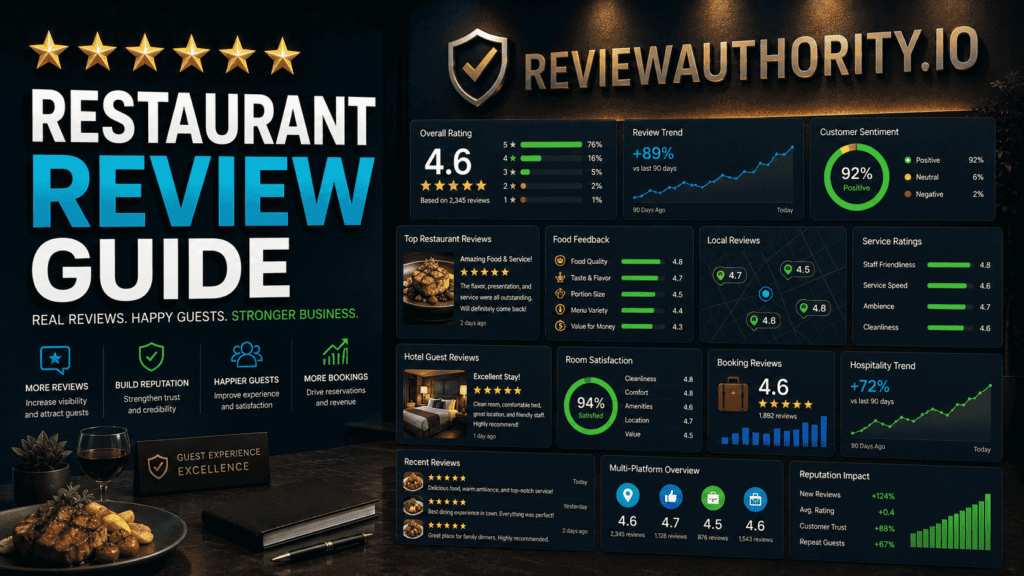
Businesses of every size rely on customer feedback to attract new clients and strengthen their online reputation. Whether you’re searching for buy reviews, buy reviews online, or learning the best way to get reviews for your business, understanding how online reviews influence buying decisions is essential. Positive reviews improve credibility, increase conversion rates, and help businesses stand out across search engines, local listings, app stores, and review platforms.
At Review Authority, businesses can strengthen their digital reputation through services such as buy reviews, buy Google reviews, buy Facebook reviews, and buy Trustpilot reviews. Companies with mobile applications can also improve marketplace visibility using buy app reviews.
Consumers rarely make purchasing decisions without checking reviews first. Whether they are hiring a contractor, booking a hotel, purchasing software, or visiting a local restaurant, customer feedback often becomes the deciding factor. That is why businesses invest time and resources into building a strong review profile across multiple platforms.
This guide explains everything you need to know about buying reviews, collecting authentic customer feedback, improving your online reputation, understanding review platforms, avoiding common mistakes, and building long-term trust that supports sustainable business growth.
Summary
Online reviews have become one of the strongest trust signals available to modern businesses. Search engines, review websites, social media platforms, and app marketplaces all use customer feedback to help users evaluate businesses before making purchasing decisions. A company with hundreds of positive reviews often appears more trustworthy than a competitor with only a handful of ratings.
Many business owners search for terms like buy reviews online, purchase reviews, buy review service, buy business reviews, and get reviews for your business because they understand that reputation directly impacts visibility and conversions. However, successful reputation management requires much more than simply increasing review counts. Review quality, consistency, platform diversity, customer engagement, and business credibility all play important roles.
Throughout this guide, you’ll learn how reviews influence customer behaviour, why review diversity matters, how businesses build stronger online credibility, what common mistakes should be avoided, and how a structured reputation strategy can support long-term business growth.
Why Buying Reviews and Reputation Management Matter
Customer reviews influence nearly every stage of the buying journey. Before contacting a company, most people search online to understand its reputation. They compare ratings, read customer experiences, evaluate business responses, and decide whether the company appears trustworthy.
A strong online reputation helps businesses:
- Increase customer confidence.
- Improve search visibility.
- Generate more enquiries.
- Increase website conversion rates.
- Strengthen local SEO performance.
- Improve brand recognition.
- Build long-term customer loyalty.
- Reduce hesitation before purchase.
Businesses that actively manage customer feedback often outperform competitors with similar products or services. Reviews provide social proof that reassures prospective customers and reduces perceived risk.
For example, a local service company with hundreds of detailed customer reviews appears far more credible than a similar business with only a few ratings. Likewise, software companies with consistent positive reviews on trusted platforms often experience higher conversion rates because potential customers feel more confident before making purchasing decisions.
Review management also extends beyond Google. Different industries rely on different review platforms depending on customer behaviour. Businesses frequently strengthen their presence across Google, Facebook, Trustpilot, app marketplaces, and industry-specific review websites to create a well-rounded online reputation.
Review Authority supports this multi-platform approach through services including Google Business Reviews, Facebook Reviews, Trustpilot Reviews, and App Store & Play Store Reviews, allowing businesses to strengthen credibility wherever potential customers research their brand.
Direct Answer: What Does Buying Reviews Mean?
Buying reviews generally refers to using a reputation management provider to help businesses increase their review presence across selected platforms. Businesses typically pursue this strategy to improve credibility, strengthen social proof, increase visibility, and encourage customer confidence. The effectiveness of any reputation strategy depends on review quality, platform diversity, customer experience, and long-term reputation management rather than simply increasing review volume.
Why Customers Trust Reviews
People naturally trust the experiences of other customers more than advertising. Reviews provide practical information about product quality, customer service, delivery speed, business professionalism, communication, pricing, and overall satisfaction.
When potential customers encounter dozens or hundreds of positive reviews, uncertainty decreases. Instead of relying entirely on marketing claims, they can evaluate real experiences from previous buyers. This makes reviews one of the most influential forms of digital social proof.
Businesses that consistently improve customer satisfaction while maintaining an active review strategy often experience stronger long-term growth than businesses that ignore reputation management altogether.
Reviews Influence Search Visibility
Search engines increasingly evaluate reputation signals when ranking local businesses. Fresh customer feedback, high ratings, review frequency, and business engagement all contribute to stronger local visibility. Businesses with active review profiles are also more likely to receive higher click-through rates because users naturally prefer companies with established credibility.
According to the Google Business Profile Help documentation, responding to customer reviews and maintaining an active business profile helps improve customer trust and engagement.
For this reason, reputation management should be viewed as an ongoing business investment rather than a one-time marketing campaign. Consistent customer feedback supports stronger visibility, higher trust, and improved long-term business performance.
Main Section 1: Understanding Different Types of Online Reviews
Not all online reviews serve the same purpose. Every platform has its own audience, ranking signals, and influence on customer decisions. Businesses that understand these differences can build a stronger and more balanced online reputation instead of relying on a single review website.
A diversified review profile also appears more natural. Customers often research businesses across Google, Facebook, Trustpilot, app stores, and industry-specific platforms before making a purchase. Seeing positive feedback across several trusted websites increases confidence far more than having reviews on only one platform.
Google Reviews
Google Reviews are often the first reviews customers encounter because they appear directly within Google Search and Google Maps. For local businesses, these reviews influence visibility, click-through rates, and customer trust.
Businesses wanting to strengthen their local presence often explore services such as buy Google reviews, increase Google reviews, or Google Business review service as part of a wider reputation strategy.
Google reviews are particularly valuable for:
- Local businesses
- Restaurants
- Hotels
- Dentists
- Medical clinics
- Law firms
- Contractors
- Retail stores
- Professional service providers
Facebook Reviews
Facebook continues to play an important role in business reputation, especially for companies that generate customers through social media marketing. Visitors frequently check Facebook recommendations before contacting a business.
Businesses with active Facebook communities often improve credibility using services like buy Facebook reviews, buy Facebook page reviews, or Facebook reputation management.
Facebook reviews work especially well for:
- Local businesses
- Beauty salons
- Restaurants
- Fitness centres
- Real estate agencies
- Event companies
- Retail brands
Trustpilot Reviews
Trustpilot has become one of the world’s most recognised independent review platforms. Customers often search Trustpilot before purchasing from online businesses, SaaS companies, ecommerce stores, financial services, and subscription brands.
Businesses seeking stronger brand credibility frequently use buy Trustpilot reviews, Trustpilot review service, or boost Trustpilot rating to strengthen their public reputation.
Unlike purely local reviews, Trustpilot reviews often influence nationwide and international purchasing decisions.
App Store and Play Store Reviews
Mobile applications compete in crowded marketplaces where ratings directly influence downloads. Users are naturally more likely to install applications that already have strong ratings and detailed customer feedback.
Developers often improve marketplace credibility through buy app reviews, buy Android reviews, buy iOS app reviews, or buy Play Store reviews.
Reviews on app marketplaces influence:
- Download decisions
- Store visibility
- User confidence
- App credibility
- Conversion rates
Industry-Specific Review Platforms
Many industries also rely on specialised review websites. Software companies may benefit from platforms like Capterra, while automotive businesses often receive feedback through DealerRater. Contractors, travel businesses, and healthcare providers each have their own trusted review ecosystems.
A balanced reputation strategy considers where potential customers actually research before making purchasing decisions.
Main Section 2: How Online Reviews Influence Customer Decisions
Reviews do much more than improve star ratings. They shape customer perception long before someone visits your website or contacts your business.
Every positive review reduces uncertainty. Instead of relying only on marketing messages, potential customers can see what previous buyers experienced. This creates trust that advertising alone cannot achieve.
Social Proof Creates Confidence
Psychologically, people prefer businesses that others already trust. When customers see hundreds of positive reviews, they feel reassured that the business consistently delivers quality products or services.
This principle, known as social proof, explains why businesses invest in reputation management rather than relying solely on paid advertising.
Businesses using comprehensive buy reviews strategies often combine Google, Facebook, Trustpilot, and app reviews to build stronger overall credibility.
Reviews Improve Conversion Rates
Imagine two businesses offering nearly identical services.
The first business has:
- 18 reviews
- 3.9-star rating
- Very little recent activity
The second business has:
- 650 reviews
- 4.8-star rating
- Regular customer feedback
- Professional responses from the owner
Most customers naturally choose the second business because the perceived risk is lower.
This illustrates why companies actively focus on getting reviews rather than waiting for customers to leave feedback naturally.
Reviews Support SEO
Search engines reward businesses that demonstrate credibility, authority, and relevance. Customer reviews contribute valuable freshness signals while also providing keyword-rich content generated by real users.
Businesses seeking stronger local SEO often combine review management with quality website content, accurate business information, and consistent customer engagement.
Many companies also strengthen overall authority using multiple services including Google review booster, Facebook review booster, and Trustpilot review campaign.
Reviews Reduce Purchase Anxiety
Before spending money, customers naturally ask themselves several questions:
- Can I trust this business?
- Will the product match the description?
- Does customer support respond quickly?
- Have other people had positive experiences?
- Is this company reliable?
Well-written customer reviews answer these questions before prospects even contact the business.
This reduces hesitation and increases the likelihood of completing a purchase.
Reviews Build Long-Term Brand Reputation
Successful companies rarely view reviews as a short-term marketing tactic. Instead, they treat customer feedback as a long-term business asset.
A consistent stream of quality reviews demonstrates that the business continues delivering positive customer experiences over time.
Brands often complement their review strategy with stronger social proof using platforms like Famix, creating an integrated online presence that supports both visibility and customer trust.
The strongest businesses don’t simply collect reviews—they build an ongoing reputation ecosystem that supports SEO, customer confidence, brand recognition, and long-term business growth.
Main Section 3: Choosing the Right Review Strategy for Your Business
Every business has different reputation goals. A local restaurant may focus on Google Maps visibility, while an ecommerce brand may depend more on Trustpilot reviews. Mobile app developers usually prioritize Play Store and App Store ratings, whereas local service providers often benefit from Google and Facebook reviews together.
Rather than concentrating on a single platform, successful businesses build a balanced review profile that reflects where their customers naturally search for information.
Local Businesses
Local businesses benefit most from reviews that improve local search visibility and customer confidence. Businesses such as restaurants, dentists, plumbers, electricians, gyms, beauty salons, real estate agencies, and law firms typically receive customers through Google Search and Google Maps.
For these businesses, services like buy Google reviews, increase Google reviews, and buy Google Business reviews help strengthen local credibility while improving customer confidence.
Ecommerce Stores
Online stores compete with hundreds of similar businesses. Customers often compare prices, shipping times, return policies, and company reputation before making a purchase.
Platforms like Trustpilot provide valuable third-party credibility that reassures buyers during the purchasing process. Combining Trustpilot reviews with Google reviews creates a stronger reputation across both search engines and independent review platforms.
Software and SaaS Companies
Software businesses rely heavily on trust because customers often purchase subscriptions before fully experiencing the product.
Strong review profiles help demonstrate product reliability, customer support quality, feature satisfaction, and long-term customer success.
Many SaaS businesses combine buy Trustpilot reviews with Google reviews to strengthen both brand credibility and search visibility.
Mobile Applications
App ratings directly affect installation decisions. Users are significantly more likely to download an app with thousands of positive reviews than one with very little feedback.
Developers frequently improve marketplace trust through buy app reviews, buy Play Store reviews, buy Android app reviews, and increase app store ratings.
Professional Service Providers
Consultants, accountants, lawyers, financial advisers, healthcare providers, and marketing agencies often depend on reputation before clients even request a consultation.
Professional reviews reduce uncertainty and demonstrate consistent client satisfaction, making them an important part of long-term business growth.
Main Section 4: What Makes a High-Quality Review?
Review quantity certainly matters, but quality matters even more. Detailed reviews help both potential customers and search engines understand the value a business provides.
Well-written reviews appear authentic because they describe real experiences rather than using generic phrases.
Characteristics of Strong Reviews
- Specific details about the service or product.
- Natural writing style.
- Balanced and believable wording.
- Mentions of customer service.
- Description of overall experience.
- Relevant keywords used naturally.
- Different writing styles between reviews.
- Appropriate review length.
Instead of saying:
“Excellent business.”
A stronger review would be:
“The ordering process was simple, customer support responded quickly, and the product arrived exactly as described. I’ll definitely use this company again.”
Detailed reviews provide genuine value for readers while creating stronger trust signals.
Consistency Matters
Businesses should avoid receiving hundreds of reviews within a very short period followed by months of inactivity.
A steady flow of customer feedback appears much more natural and reflects ongoing customer engagement.
Many businesses therefore prefer long-term reputation campaigns rather than one-time review increases.
Services such as buy reviews online, buy permanent Google reviews, buy genuine Facebook reviews, and buy authentic Trustpilot reviews are commonly integrated into broader reputation management plans.
Main Section 5: Building a Long-Term Reputation Strategy
Online reputation should never be viewed as a one-time task. Successful businesses continuously strengthen their credibility by combining excellent customer service with consistent review generation.
A long-term strategy produces stronger results than chasing short-term increases in review numbers.
Create Multiple Trust Signals
Reviews are only one part of customer trust.
Strong businesses also invest in:
- Professional websites
- Helpful blog content
- Clear contact information
- Fast customer support
- Verified business profiles
- Social media activity
- Case studies
- Testimonials
Together, these assets create a stronger online presence that supports higher conversion rates.
Respond to Customer Reviews
Replying to reviews demonstrates professionalism.
Thank customers for positive feedback and respond politely to criticism. Future customers often read business responses before making purchasing decisions.
Businesses that actively engage with reviewers frequently build stronger customer loyalty than businesses that ignore feedback.
Monitor Your Reputation
Review management should include regular monitoring of:
- Average star ratings.
- Review frequency.
- Customer sentiment.
- Competitor review growth.
- Platform diversity.
- Business response rates.
Regular monitoring allows businesses to identify problems early and maintain consistent brand trust.
Combine Reviews with Marketing
Customer reviews become even more valuable when incorporated into broader marketing efforts.
Many businesses showcase positive reviews on:
- Landing pages.
- Product pages.
- Email campaigns.
- Sales presentations.
- Social media.
- Paid advertisements.
Displaying authentic customer experiences helps reinforce trust throughout the buying journey.
Businesses looking for broader online credibility often combine review growth with social proof services from Famix, creating a stronger digital presence across multiple channels.
Ultimately, reputation management is an ongoing investment. Businesses that consistently improve customer satisfaction while maintaining healthy review profiles are better positioned for long-term visibility, stronger SEO performance, and sustainable business growth.
Common Mistakes to Avoid When Building Online Reviews
Building a strong online reputation takes consistency, patience, and a customer-first mindset. Many businesses focus only on increasing their review count while overlooking the quality of their customer experience and reputation strategy. Avoiding common mistakes can help you build lasting trust and improve long-term results.
1. Depending on a Single Review Platform
Many businesses make the mistake of focusing only on one platform. While Google Reviews are essential for local visibility, customers often research businesses across several trusted websites before making a decision.
A balanced reputation strategy should include multiple review sources. For example, local businesses may combine buy Google reviews with buy Facebook reviews, while ecommerce businesses often strengthen credibility using buy Trustpilot reviews.
2. Chasing Quantity Instead of Quality
Having thousands of short, repetitive reviews rarely creates as much trust as a smaller number of detailed, natural customer experiences.
Quality reviews typically explain:
- What product or service was purchased.
- How the customer experience was.
- Whether customer support was helpful.
- Why they would recommend the business.
- What stood out during the experience.
Detailed reviews help future customers make informed decisions while also providing richer content for search engines.
3. Ignoring Negative Reviews
No business receives perfect feedback forever. Ignoring criticism often creates a worse impression than the negative review itself.
Professional responses show potential customers that the business values feedback and actively works to improve customer satisfaction.
Whenever appropriate:
- Thank the customer.
- Acknowledge the issue.
- Offer to resolve the problem.
- Remain professional.
- Avoid defensive responses.
4. Allowing Review Profiles to Become Inactive
Customers naturally trust businesses that continue receiving recent feedback.
A review profile with hundreds of old reviews but no recent activity may appear less reliable than a profile receiving consistent customer feedback each month.
Maintaining ongoing review growth through a structured reputation strategy helps demonstrate that the business continues serving satisfied customers.
5. Forgetting to Ask Happy Customers
Many satisfied customers never leave reviews simply because nobody asks them.
Businesses should create simple review request processes after successful purchases, completed projects, appointments, or deliveries.
Review invitations can be included in:
- Follow-up emails.
- SMS messages.
- Invoices.
- Thank-you pages.
- Customer support conversations.
6. Neglecting Mobile Users
Most review submissions now happen on mobile devices. Businesses should ensure review links are easy to access and work smoothly across smartphones and tablets.
If your company operates a mobile application, combining customer satisfaction with buy app reviews can further strengthen marketplace credibility.
Expert Recommendations for Sustainable Reputation Growth
Strong online reputations are built through consistent improvement rather than quick fixes. Businesses that achieve lasting success typically combine excellent customer service with structured review management.
Focus on Customer Experience First
Excellent reviews begin with excellent service.
Improving communication, delivery times, product quality, and customer support naturally increases customer satisfaction and creates more opportunities for positive feedback.
Create a Review Collection Process
Successful businesses don’t rely on luck. They build systems that encourage satisfied customers to leave reviews after positive interactions.
This process might include:
- Automated email follow-ups.
- QR codes linking directly to review pages.
- SMS reminders.
- Post-purchase review invitations.
- Customer satisfaction surveys.
Monitor Every Major Platform
Track your business across Google, Facebook, Trustpilot, app stores, and industry-specific review websites.
Respond quickly to new reviews and identify recurring customer concerns before they become larger reputation issues.
Build Authority Across Multiple Platforms
Customers often compare businesses using several different websites.
Combining buy reviews, Google review services, Facebook reviews, and Trustpilot reviews creates a more complete online reputation.
Measure Success Beyond Star Ratings
Don’t focus only on average ratings.
Monitor metrics such as:
- Review frequency.
- Customer sentiment.
- Website conversions.
- Organic traffic.
- Local search rankings.
- Customer enquiries.
- Lead generation.
- Sales growth.
These indicators provide a more complete picture of how reputation management contributes to business performance.
Future Trends in Online Reputation Management
Online reviews continue evolving alongside search technology, artificial intelligence, and customer expectations.
AI-Powered Search Will Highlight Reputation
Google AI Overviews, ChatGPT, Gemini, Perplexity, and other answer engines increasingly analyse trustworthy business information when generating responses.
Businesses with strong review profiles, helpful content, and consistent customer feedback will likely benefit from improved visibility in AI-assisted search experiences.
Review Authenticity Will Become Even More Important
Customers continue becoming better at recognising generic or low-quality reviews.
Detailed, experience-based feedback that reflects genuine customer interactions will remain the strongest long-term trust signal.
Multi-Platform Reputation Will Replace Single-Platform Strategies
Future customers will compare businesses across multiple review websites before making purchasing decisions.
Companies maintaining healthy review profiles on Google, Facebook, Trustpilot, app stores, and other trusted platforms will appear more established and credible.
Customer Engagement Will Matter More
Businesses that actively respond to reviews, answer questions, and engage with customers will continue building stronger relationships than businesses that remain inactive.
Reviews Will Become Part of Every Marketing Strategy
Customer feedback is no longer separate from marketing.
Reviews now support:
- Search engine optimisation.
- Paid advertising.
- Landing pages.
- Email marketing.
- Social media campaigns.
- Sales presentations.
- Brand credibility.
Businesses that integrate reviews throughout their marketing efforts will continue earning greater customer trust while improving long-term conversion performance.
By combining consistent customer satisfaction, professional reputation management, and strategic review growth, businesses can create an online presence that supports sustainable growth for years to come.
Key Takeaways
- Online reviews are one of the strongest trust signals influencing customer purchasing decisions.
- A successful buy reviews strategy focuses on long-term reputation growth rather than simply increasing review numbers.
- Google Reviews help improve local SEO, while Facebook, Trustpilot, and app reviews strengthen credibility across different customer touchpoints.
- High-quality reviews are detailed, natural, and describe genuine customer experiences instead of using repetitive wording.
- Businesses should diversify their reputation by building reviews across multiple trusted platforms rather than depending on a single website.
- Consistent review growth creates stronger customer confidence than large bursts of reviews followed by long periods of inactivity.
- Combining Google Reviews, Facebook Reviews, Trustpilot Reviews, and App Reviews creates a well-rounded online reputation.
- Responding professionally to customer feedback demonstrates transparency and builds additional trust with future customers.
- Monitoring review quality, customer sentiment, and review frequency helps businesses maintain a healthy reputation over time.
- Long-term reputation management supports SEO, improves conversion rates, increases customer confidence, and strengthens overall brand authority.
Conclusion
Building a strong online reputation is no longer optional. Before making a purchase, booking a service, or contacting a business, customers routinely compare ratings, read customer experiences, and evaluate how trustworthy a company appears online. A well-managed review profile helps reduce uncertainty while increasing confidence in your products or services.
Businesses searching for buy reviews, buy reviews online, or broader reputation management solutions should focus on building long-term credibility instead of pursuing short-term results. A balanced strategy combines excellent customer service with consistent review growth across multiple trusted platforms.
Review Authority provides comprehensive reputation solutions including buy Google reviews, buy Facebook reviews, buy Trustpilot reviews, and buy app reviews. These services help businesses strengthen credibility where customers naturally research before making purchasing decisions.
As customer expectations continue evolving and AI-powered search becomes more influential, businesses with consistent, trustworthy review profiles will be better positioned to attract new customers, improve visibility, and build sustainable long-term growth.
Frequently Asked Questions
What does buying reviews mean?
Buying reviews generally refers to using professional reputation management services that help businesses strengthen their online review presence across trusted platforms. The most effective strategies focus on long-term credibility, platform diversity, and customer trust.
Why are online reviews important for businesses?
Online reviews influence customer confidence, purchasing decisions, local search visibility, click-through rates, and overall brand credibility. Many customers read reviews before contacting a business or making a purchase.
Which review platform is most important?
It depends on your business. Local companies often prioritise Google Reviews, while ecommerce businesses may benefit from Trustpilot Reviews. Businesses active on social media frequently strengthen credibility with Facebook Reviews.
Should businesses collect reviews on multiple platforms?
Yes. Diversifying reviews across several trusted platforms creates stronger customer confidence than relying on only one review website. It also supports broader visibility throughout the customer buying journey.
Can app developers benefit from customer reviews?
Absolutely. Positive app reviews improve marketplace credibility, encourage downloads, and increase user confidence. Businesses with mobile applications often strengthen visibility using App Store and Play Store review services.
How often should businesses request reviews?
Review collection should be an ongoing process. Businesses should politely invite satisfied customers to leave feedback after successful purchases, completed services, or positive customer interactions.
Do responses to reviews matter?
Yes. Professional responses show customers that your business values feedback and actively engages with its audience. Responding to both positive and negative reviews helps strengthen trust and demonstrates good customer service.
How does Review Authority help businesses?
Review Authority offers reputation management services that help businesses strengthen their presence across major review platforms including Google, Facebook, Trustpilot, and mobile app stores. Businesses can build stronger online credibility while supporting long-term reputation growth.